Totrak
Disconnected tracking systems made it difficult for stakeholders to stay aligned across the supply chain.
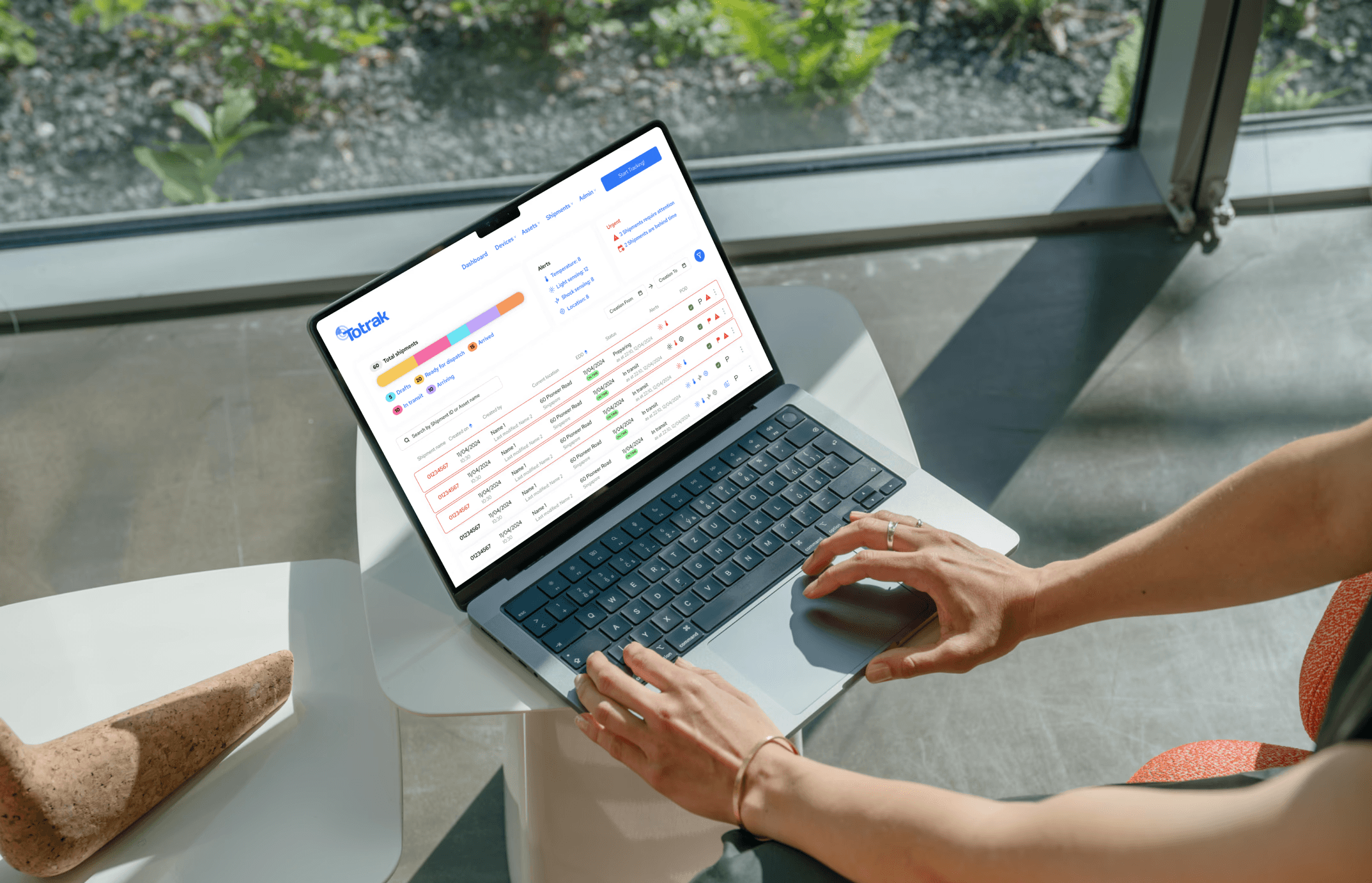
Totrak is a unified platform to centralise tracking, improve visibility, and streamline coordination. Designed to reduce reliance on manual coordination across fragmented systems.
Catered to operational users who need quick, reliable information without time to navigate complex systems.
🧠 Problem
Supply chain operations relied on fragmented systems and manual coordination, leading to:
Limited visibility across stakeholders
Delays caused by inconsistent or outdated information
Difficulty tracking shipments end-to-end
Compliance risks due to missing or incomplete data
Users needed to quickly access accurate information, but existing workflows required switching between tools and manually verifying updates.
🎯 goal
Design a platform that:
Centralises tracking into a single source of truth
Improves visibility across stakeholders
Reduces reliance on manual coordination
Supports clearer, more reliable workflows
📦 Outcome
Improved visibility across shipments for operations teams and stakeholders
Reduced manual status checks and back-and-forth coordination for teams managing day-to-day logistics
Enabled faster alignment across stakeholders working with time-sensitive operational data
Consolidated fragmented tracking into a single system for easier end-to-end monitoring
Totrak
Disconnected tracking systems made it difficult for stakeholders to stay aligned across the supply chain.
Totrak is a unified platform to centralise tracking, improve visibility, and streamline coordination. Designed to reduce reliance on manual coordination across fragmented systems.
Catered to operational users who need quick, reliable information without time to navigate complex systems.
Disconnected tracking systems made it difficult for stakeholders to stay aligned across the supply chain.
Totrak is a unified platform to centralise tracking, improve visibility, and streamline coordination. Designed to reduce reliance on manual coordination across fragmented systems.
Catered to operational users who need quick, reliable information without time to navigate complex systems.
🧠 Problem
Supply chain operations relied on fragmented systems and manual coordination, leading to:
Limited visibility across stakeholders
Delays caused by inconsistent or outdated information
Difficulty tracking shipments end-to-end
Compliance risks due to missing or incomplete data
Users needed to quickly access accurate information, but existing workflows required switching between tools and manually verifying updates.
🎯 goal
Design a platform that:
Centralises tracking into a single source of truth
Improves visibility across stakeholders
Reduces reliance on manual coordination
Supports clearer, more reliable workflows
⚙️ Approach 1
Centralising fragmented data
Centralising fragmented data
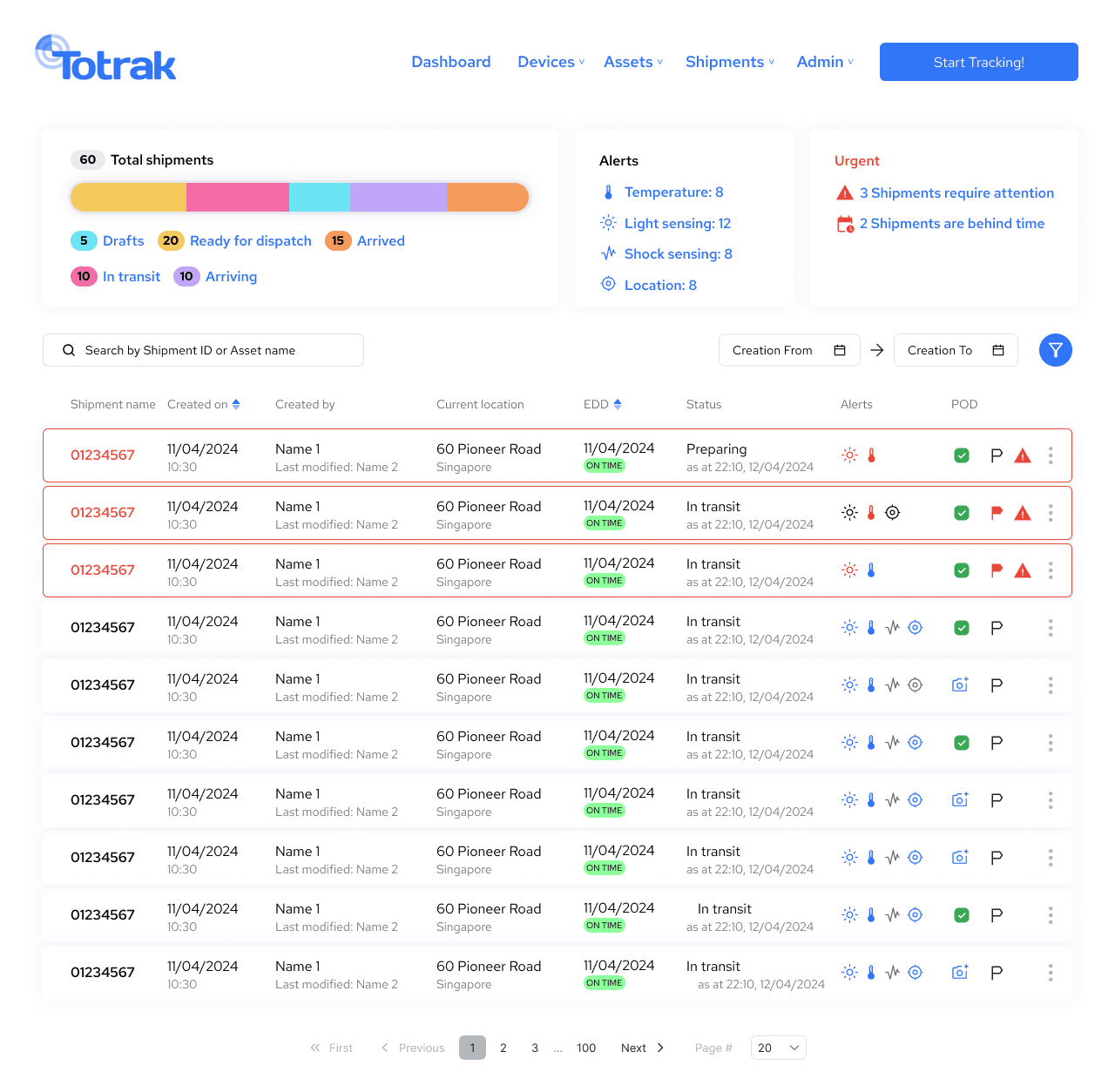
Instead of multiple disconnected touchpoints, the platform consolidates:
Shipment tracking
Status updates
Stakeholder visibility
👉 This reduces context switching and creates a single, reliable workflow.
⚙️ Approach 2
Prioritising clarity over complexity
Prioritising clarity over complexity
Supply chain data can be dense, so the interface focuses on:
Clear status hierarchy
Simplified views of key information
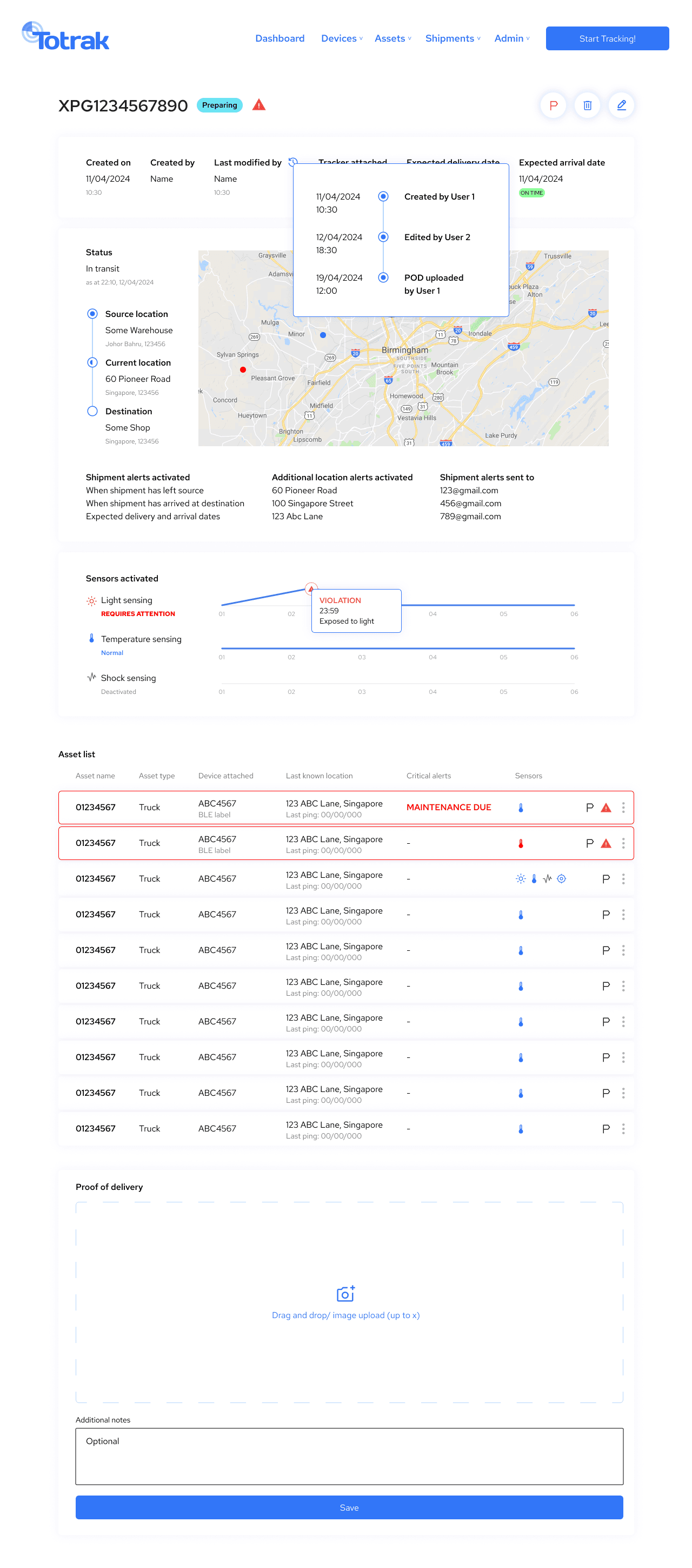
Progressive disclosure for detailed data
👉 Users can scan quickly without being overwhelmed.
⚙️ Approach 3
Designing for real-time coordination
Designing for real-time coordination
To improve stakeholder alignment:
Updates are surfaced clearly
Key actions are prioritised within workflows
Information is structured for quick decision-making
👉 Reduces delays caused by miscommunication.
⚙️ Approach 4
Supporting compliance through structure
Supporting compliance through structure
Instead of treating compliance as a separate layer:
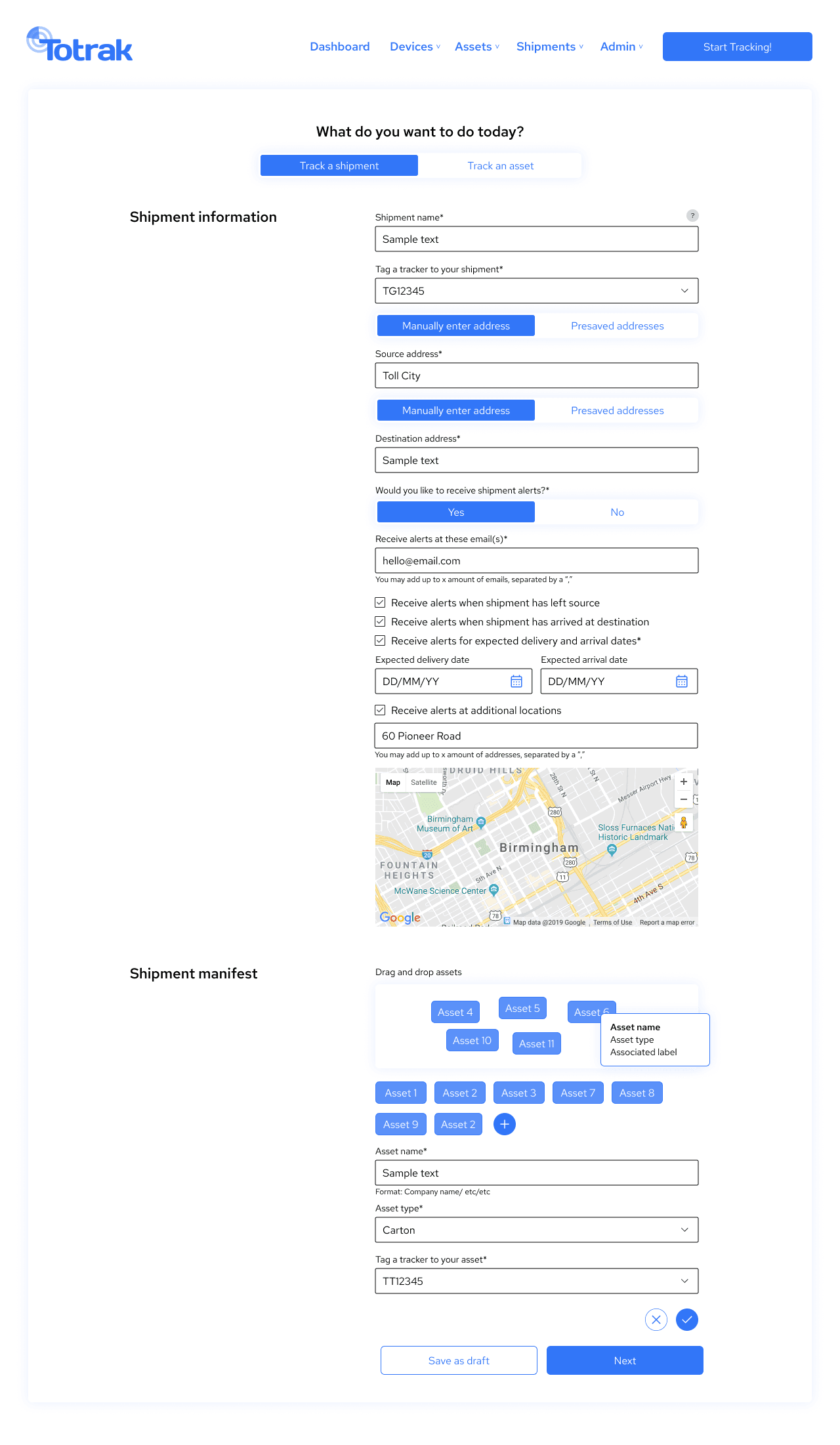
Required data is embedded into workflows
Tracking is standardised across the system
👉 Ensures consistency without adding friction.
📦 Outcome
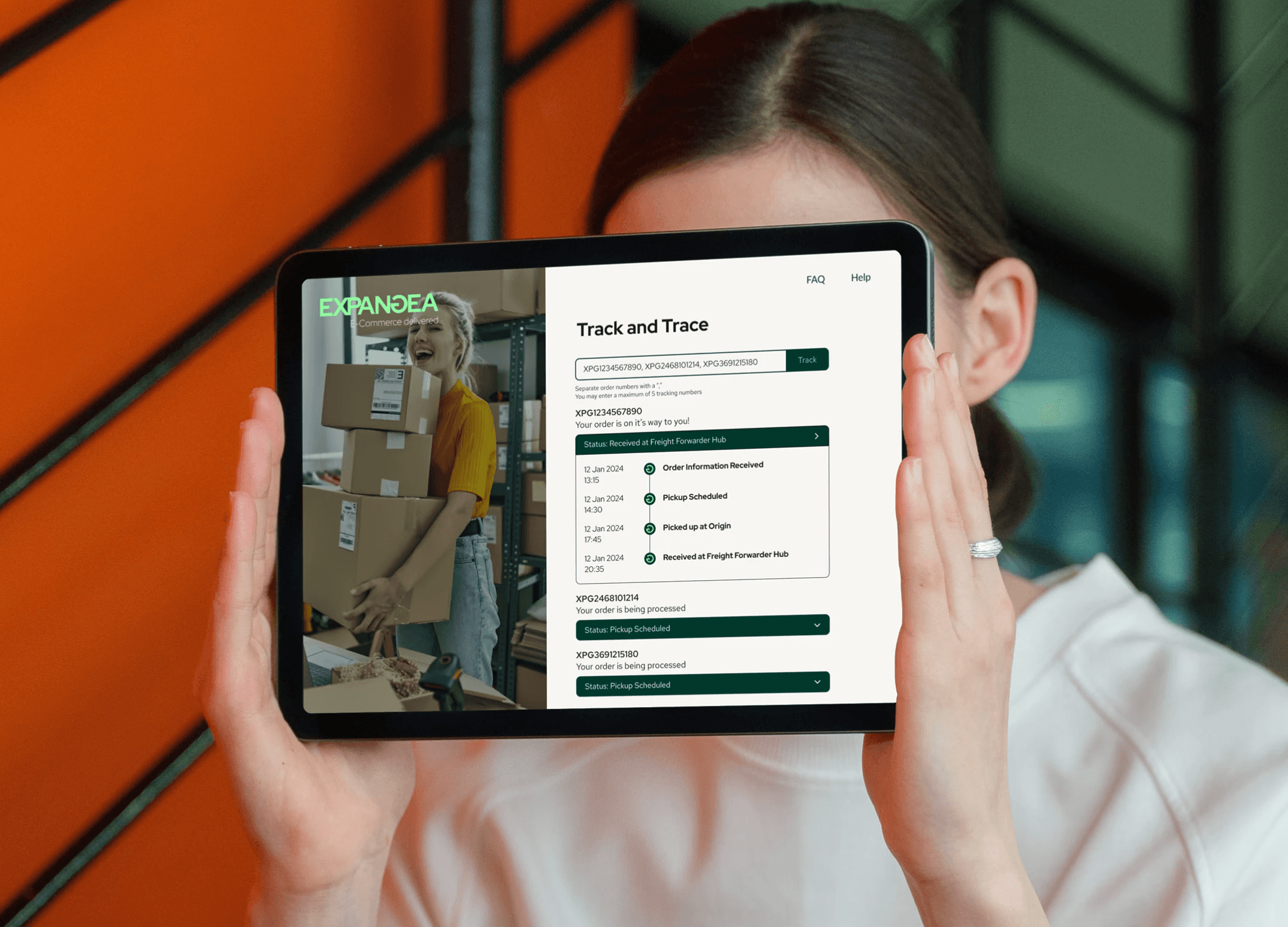
Improved visibility across shipments for operations teams and stakeholders
Reduced manual status checks and back-and-forth coordination for teams managing day-to-day logistics
Enabled faster alignment across stakeholders working with time-sensitive operational data
Consolidated fragmented tracking into a single system for easier end-to-end monitoring
Other UX Case Studies
Other UX Case Studies
Open to product design opportunities and selected brand/web partnerships.
© 2026 · Built on Framer. Optimised for Web.
Open to product design opportunities and selected brand/web partnerships.
© 2026 · Built on Framer. Optimised for Web.
Open to UX opportunities and selected brand/web partnerships
© 2026 · Built on Framer.
Optimised for Web.